The Benefits of Using a Silent Diesel Generator for Backup Power?
In an increasingly unpredictable world, having reliable backup power has become essential. A silent diesel generator offers an effective solution for many. Its quiet operation allows for seamless use in residential and commercial settings.
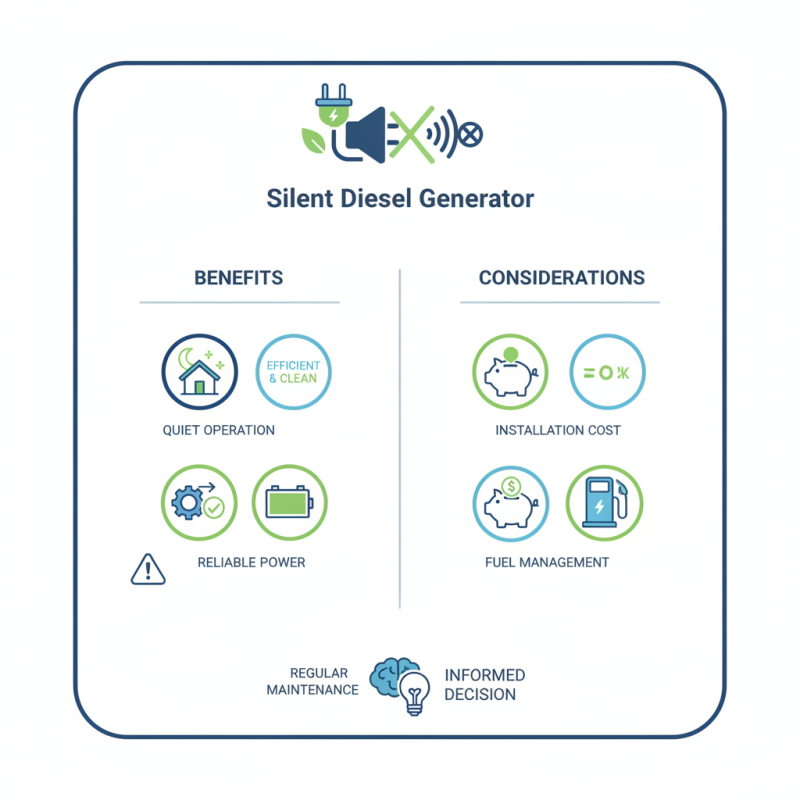
Imagine dealing with a power outage, the worry can be overwhelming. With a silent diesel generator, you can maintain essential operations without disturbing your neighborhood. These generators are designed to run efficiently, reducing noise and emissions. However, they require regular maintenance, which often gets overlooked.
The convenience of a silent diesel generator goes beyond noise control. It provides consistent power when you need it most. Yet, users must consider the installation costs and fuel management. Reflecting on these aspects can lead to informed decisions about backup power solutions.
Key Advantages of Silent Diesel Generators for Backup Power
Silent diesel generators offer significant advantages for backup power solutions. Their low noise levels are a key feature. Reports indicate that these generators can operate at sound levels as low as 50 dB. This makes them ideal for residential areas or commercial spaces that require minimal disruption. Compared to traditional generators, silent models reduce noise pollution, enhancing overall comfort for users.
Efficiency is another major benefit. Silent diesel generators are designed to maximize fuel usage. According to the International Energy Agency, diesel generators can achieve efficiency rates of up to 40%. This means they consume less fuel while providing reliable power. In environments where electricity reliability is a concern, this efficiency can prevent long-term costs from escalating.
However, it is important to acknowledge some shortcomings. While they are quieter and more efficient, silent diesel generators can be more expensive upfront. They often require special installation and maintenance, which adds to the total cost. Some users may find that the sound insulation technology can occasionally hum or vibrate. These factors warrant consideration when selecting a backup power system for specific needs.
Noise Reduction Benefits of Silent Diesel Generators
Silent diesel generators have become increasingly popular for backup power. One of the most significant advantages is their noise reduction capabilities. Standard diesel generators can be loud, often exceeding 70 decibels when operating. This noise can disrupt nearby residential areas and workplaces, leading to complaints and possible regulations. Silent diesel generators, in contrast, typically operate at 55 decibels or lower, blending more seamlessly into environments where peace is crucial.
According to a report by the Noise Control Foundation, exposure to high noise levels can affect productivity and overall well-being. Silent diesel generators can mitigate these concerns. Their quiet operation allows for energy use without the intrusive sound often associated with power generation. Additionally, the use of advanced soundproofing technology helps reduce noise pollution. A study from the Environmental Protection Agency suggests that lowering ambient noise by just 10 decibels can lead to a noticeable increase in comfort and work performance.
However, some users may still find the initial cost of silent diesel generators challenging. Prices can be higher than conventional models. Installation and maintenance costs might also add up. Evaluating these factors is essential when considering long-term investments. The trade-off for a quieter environment often proves worthwhile for many businesses and homes prioritizing peace and efficiency.
Cost Efficiency of Silent Diesel Generators in Emergency Situations
Silent diesel generators are becoming crucial for backup power, especially in emergencies. Their cost efficiency is a primary factor. According to industry reports, silent diesel generators can save businesses up to 30% in fuel costs compared to traditional generators. This savings is vital when unexpected power outages occur.
In emergency situations, every minute counts. Companies often face significant losses during power disruptions. Silent diesel generators provide a reliable power source, reducing downtime. They can run for hours without interruption, ensuring continuous operations. The noise reduction feature also makes them suitable for urban settings where noise regulations exist.
However, potential buyers should consider maintenance costs. Diesel generators require regular servicing, which can add up. The initial investment might seem high, but the long-term benefits often outweigh these costs. Choosing the right generator is crucial. Evaluate the energy needs and frequency of use before making a decision. This reflection can lead to better operational efficiency and cost savings over time.
Environmental Impact and Sustainability of Silent Diesel Generators
Silent diesel generators offer remarkable benefits, particularly when considering their environmental impact. Unlike traditional generators, these units operate quietly, reducing noise pollution. This feature is vital for residential areas or nature reserves, where noise can disrupt wildlife and community life. Silent generators also emit fewer pollutants than older diesel models, aligning with efforts to maintain cleaner air quality.
However, these machines are not completely without flaws. The use of diesel fuel carries inherent environmental risks. Diesel combustion produces nitrogen oxides and particulate matter, which can harm human health. These emissions challenge the sustainability goals many communities aspire to achieve. It’s essential to balance efficiency and ecological responsibility.
Moreover, maintenance of silent diesel generators requires attention. Regular servicing can help meet emissions standards, but neglect may increase their environmental footprint. The need for sustainable fuel alternatives also arises. Research into biofuels or hybrid technology can provide new pathways forward. Such advancements could significantly enhance the eco-friendliness of these generators. It is clear that while silent diesel generators offer benefits, we must also face the challenges they present.
The Benefits of Using a Silent Diesel Generator for Backup Power
This bar chart illustrates the benefits of using a silent diesel generator for backup power. Each category represents a specific advantage such as low noise level, fuel efficiency, emissions reduction, operational cost, and maintenance, rated on a scale from 1 to 10. These factors contribute to the environmental impact and sustainability of silent diesel generators.
Versatility and Applications of Silent Diesel Generators in Various Settings
Silent diesel generators are increasingly popular for backup power across various settings. Their versatility is a significant advantage. They are widely used in healthcare facilities. Hospitals rely on these generators to ensure continuous power during emergencies. A recent industry report indicates that 30% of healthcare providers consider backup power essential for patient safety.
In construction sites, silent diesel generators play a crucial role. They minimize noise pollution while providing reliable energy for machinery. This is vital in urban areas where noise restrictions apply. Construction companies report that using quieter models improves worker productivity. Surprisingly, some non-profits utilize these generators for community events. They provide power for lighting and sound equipment without disturbing the neighborhood.
However, silent diesel generators come with challenges. Their initial investment can be high, affecting budgets. Maintenance is another concern. Regular checks are necessary to keep them running efficiently. Some users find it easy to underestimate these upkeep needs. Overall, the benefits often outweigh the drawbacks, but careful planning is essential for optimal use.