


Made in Britain
BrightLEDBrightLED
MENUMENU
  • Home
  • Products
  • Projects
  • About
  • Blog
  • Contact
Blog
10 Best Botanical Garden Light Show Suppliers in 2026

10 Best Botanical Garden Light Show Suppliers in 2026

A botanical garden light show can turn familiar paths into a nighttime experience: leaves catch warm color, water reflects moving patterns, and visitors pause beneath illuminated branches. Yet spectacle alone is not enough. A successful installation must respect plant health, protect dark garden areas, guide safe visitor movement, and withstand changing weather. The right supplier understands both the technical plan and the character of the landscape.

Lighting designer John Cullen is known for an approach that places the setting before the fixture. A concise paraphrase of that principle is: “Reveal the garden; do not overpower it.” It is a useful test when comparing proposals. Ask how each supplier balances brightness, color, installation access, power needs, maintenance, and removal after the season. Request project references, clear schedules, and examples of work in living landscapes—not only photographs of dramatic effects.

Details matter. A cable crossing a damp path, a spotlight aimed into visitors’ eyes, or a saturated wash on delicate foliage can weaken an otherwise beautiful display. No supplier gets every choice right. That deserves scrutiny. The strongest partners explain trade-offs, adjust designs after site visits, and provide a realistic service plan.

This guide reviews 10 botanical garden light show suppliers in 2026, focusing on creative capability, operational reliability, and fit for different venues. Use the comparisons as a starting point, then verify current portfolios, specifications, and references directly. A polished proposal is promising; the garden itself is the real test.
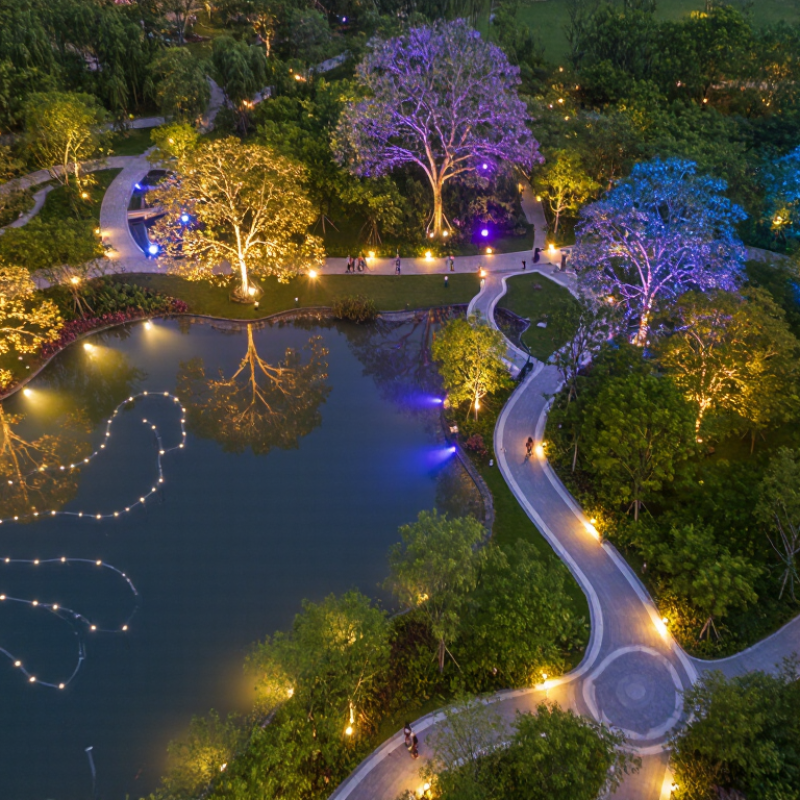
10 Best Botanical Garden Light Show Suppliers in 2026
Table of Contents [Hide]
1 What Botanical Garden Light Show Suppliers Provide
2 Criteria for Evaluating Suppliers in 2026
3 Profiles of the 10 Best Botanical Garden Light Show Suppliers
4 Comparing Supplier Services, Technology, and Expertise
5 How Botanical Gardens Can Plan and Procure a Light Show

What Botanical Garden Light Show Suppliers Provide

Botanical garden light show suppliers provide more than decorative fixtures. They can develop a route plan, lighting concept, equipment list, and installation schedule around the garden’s paths, trees, and water features. A good team checks sightlines and power access before placing lights. It may also supply weather-rated fixtures, control systems, cabling, and on-site technicians to program scenes and troubleshoot during opening hours. The details matter: a bright wash can flatten a textured tree trunk, while a narrow beam can reveal its shape.

Tips: Ask for a sample lighting test after dark. Check how cables will be protected across walkways. Request a clear maintenance plan, including who replaces failed fixtures and how quickly. Keep it simple.

Many suppliers also coordinate installation, removal, and storage, reducing the work required of garden staff. Some can adapt timing and brightness for quiet zones, evening events, or changing seasonal conditions. Ask how the show will affect regular visitors, staff access, and plant-care routines. Not every dramatic concept works in a real garden. A design may look striking in a rendering but feel crowded beside a narrow path. Review a site-specific plan and confirm responsibilities in writing before production begins.


Criteria for Evaluating Suppliers in 2026

A supplier’s portfolio matters, but proof matters more. Ask for a site-specific lighting plan showing beam angles, fixture positions, power loads, and dark zones. Walk the route after dusk if possible. A glowing canopy may look beautiful in a rendering yet leave roots, steps, or signs hard to see. Small details decide.

Energy figures should be documented, not promised. The U.S. Department of Energy’s Energy Saver guidance reports that LEDs use at least 75% less energy. It also says they can last up to 25 times longer than incandescent lamps. Ask suppliers to state fixture wattage, operating hours, dimming range, and estimated annual consumption. Compare like for like. Request weather-protection ratings, test records, spare-part availability, and written repair response times; rain finds weak connectors quickly.

Operational experience deserves equal weight. Request references for gardens with similar tree cover, paths, and visitor volumes, plus a sample installation schedule and commissioning checklist. Confirm how crews protect roots, keep accessible routes open, and remove equipment without damaging planting beds. Ask who checks glare and cable covers before opening. No spreadsheet captures every visitor’s experience. I would still score suppliers against shared criteria, then inspect a completed site; polished proposals can hide awkward realities.

Profiles of the 10 Best Botanical Garden Light Show Suppliers

Botanical garden light-show suppliers differ in what they build and how they work with living landscapes. A horticultural lighting designer plans scenes around plant form and seasonal growth. A scenic fabricator creates arches, illuminated sculptures, and sturdy display frames. A projection-mapping team turns trunks or facades into changing canvases, but needs clear sightlines. An LED installation specialist handles low-voltage wiring and weatherproof fixtures. Ask to see a sample scene before approving the color palette.

An interactive-light supplier adds motion or touch-responsive elements along visitor paths. A seasonal event producer coordinates installation, staffing, and nightly operations. A lantern workshop handcrafts glowing forms, often using paper, fabric, or metal. A power-and-controls provider sizes circuits, timers, and backup systems for the site. Details matter. Check cable routes, service access, and how equipment will be protected from rain and irrigation. A beautiful mock-up can still miss a muddy path.

A route-planning specialist helps balance light levels, crowd flow, and accessible movement. A turnkey integrator combines design, fabrication, installation, and maintenance under one project plan. These profiles are starting points, not guarantees of quality. Request site-specific references, written schedules, and a maintenance plan that names response times. One limitation is easy to overlook: a supplier may excel at spectacle but lack botanical sensitivity. Review plans with garden staff before work begins.

Comparing Supplier Services, Technology, and Expertise

For a botanical garden light show, compare suppliers beyond the brightness of a sample display. Ask who handles site surveys, installation, nightly operation, and repairs after rain or wind. A dependable team maps cable routes around roots and paths, then tests glare near ponds and visitor seating. Small details matter. Request a full-scale mock-up, not just a screen rendering. It reveals whether color washes flatten leaf texture or spill into quiet habitats.

Technology claims need context. The International Energy Agency’s lighting analysis estimates that lighting uses about 15% of global electricity. The U.S. Department of Energy says LED bulbs can use up to 90% less energy than incandescent bulbs, but outdoor show performance depends on controls, optics, and operating hours. Compare measured power draw, dimming range, weather ratings, and replacement access. Ask suppliers to explain how they prevent flicker in video and reduce stray light beyond the intended scene. Expertise shows in the answers. Clear maintenance plans, spare-unit availability, and trained on-site technicians can matter more than elaborate projections. I would also question any proposal promising zero impact; gardens are living sites, and careful monitoring may still reveal problems after opening.

10 Best Botanical Garden Light Show Suppliers in 2026: Evaluation Priorities

Suggested comparison framework: project-fit criteria are assigned weights totaling 100%. Use these priorities to assess suppliers consistently; the percentages are evaluation weights, not supplier-specific ratings or market-survey results.

How Botanical Gardens Can Plan and Procure a Light Show

How Botanical Gardens Can Plan and Procure a Light Show

A successful garden light show starts with the site, not a supplier shortlist. Map paths, mature trees, ponds, steep sections, and sensitive planting before requesting proposals. Note where visitors may queue and where service vehicles can safely turn. Even a modest route can feel crowded when a narrow bridge becomes a photo stop.

Write a brief that describes visitor capacity, opening hours, installation dates, weather exposure, power access, and accessibility needs. Ask each supplier for a scaled lighting plan, equipment schedule, staffing assumptions, and itemized pricing. Check how fixtures will be secured without damaging roots, and how cables will be protected from visitors and routine garden work. Request references for comparable outdoor projects, then ask what went wrong and how the team responded. That answer can reveal more than a polished portfolio.

Be specific about maintenance. Who replaces a failed fixture at 7 p.m.? How quickly can a dark section be made safe? Require a site walk and a small nighttime mock-up before final approval. It costs time. It can also catch glare across a pond or colors that flatten winter bark. Leave room in the budget for repairs and changing conditions; garden paths rarely behave exactly like a drawing. A detailed contract helps, but regular conversations during installation still matter.

10 Best Botanical Garden Light Show Suppliers in 2026 - How Botanical Gardens Can Plan and Procure a Light Show

Supplier categories—not a ranked list of named companies. Compare providers against your site, audience, safety, and operating requirements.

Supplier type Typical scope Best suited to What to request in the proposal
Turnkey light-show producers Concept development, lighting design, equipment, installation, show control, and event operation. Gardens seeking one lead contractor for a coordinated seasonal event. A defined scope matrix, site-specific layout, schedule, staffing plan, exclusions, and itemized costs.
Architectural and landscape lighting designers Lighting plans for paths, trees, structures, water features, and visitor areas; may coordinate with separate installers. Projects where landscape character, visual restraint, and wayfinding are priorities. Fixture schedules, aiming details, control zones, power assumptions, and nighttime mock-up or test plan.
Projection-mapping specialists Projection systems, media servers, content mapping, playback, and technical operation. Gardens with suitable façades, visitor-center surfaces, or other stable projection targets. Brightness and throw-distance assessment, surface survey, weather contingency, content rights, and focus test.
Immersive audio and soundscape providers Distributed speakers, localized audio, sound design, playback control, and noise-management planning. Routes or themed zones that benefit from narrative or synchronized sound. Speaker locations, coverage plan, operating levels, quiet-zone strategy, and neighbor-noise controls.
Interactive-light technology providers Sensors, responsive lighting, interactive installations, software, and visitor-facing controls. Family-oriented experiences or installations designed for visitor participation. Accessibility approach, data collection details, failure mode, maintenance plan, and offline operation capability.
Temporary event-power and distribution contractors Load calculations, temporary power distribution, cable routing, protection, and electrical testing. Sites with limited outlets, long routes, or multiple lighting and production zones. Load schedule, power-source assumptions, cable protection plan, inspection records, and emergency procedures.
Custom scenic and installation fabricators Fabricated structures, light-integrated scenic elements, mounting systems, and installation support. Events requiring distinctive physical installations or temporary themed features. Drawings, material specifications, anchoring method, wind considerations, installation sequence, and removal plan.
Horticultural and ecological lighting consultants Advice on lighting placement and operation in relation to planting, wildlife, sensitive habitats, and dark areas. Botanical collections or sites with habitat, wildlife, or conservation sensitivities. A site review, sensitive-area map, operating-hour recommendations, and monitoring or mitigation measures.
Event operations and crowd-management providers Visitor-flow planning, stewarding, queue management, signage, and operational procedures. Popular events with timed entry, narrow paths, or multiple visitor zones. Capacity assumptions, accessible route plan, staffing levels, emergency access, and bad-weather procedures.
Show-control and AV integration providers Synchronization and control of lighting, audio, projection, networked devices, and show playback. Multi-zone shows where several technical systems need coordinated operation. System architecture, operator interface, backup and recovery plan, documentation, and staff training.

Procurement note: Confirm insurance, relevant safety credentials, references for comparable outdoor work, equipment weather suitability, maintenance responsibilities, and clear ownership of creative and technical deliverables. Final approvals and requirements depend on local regulations and the garden’s site conditions.

Article Source:

  • botanical garden lantern festival
  • botanical garden light show

Interested? Let's talk.

Talk to the Experts

Let us help you get started with our superior LED lighting products.

Call 01282 505400

Request a call

Email us

Join our newsletter

Get all the latest news from BrightLED.

See our product range

Can't find a product you're looking for? Get in touch!

View Range

Product Categories

  • 2D Style Fitting
  • LED Downlights
  • LED Flood Lights
  • Linear Lights
  • LED Industrial Lighting
  • Office Lighting
  • Retail LED Lighting
  • Emergency Lighting
  • LED Lamps
  • LED Tube Lighting
  • Recessed LED Light
  • Spot Light Series
  • IP65 & Non-corrosive Rating LED Fittings
  • View all products

Useful Links

  • Download/Resources
  • Privacy
  • Warranty Policy
  • Terms and Conditions

Company

  • About
  • Projects
  • Contact
  • Blog
  • Made in Britain
  • Samsung
  • Osram
  • Tridonic

Copyright © Bright LED. All rights reserved.

STAY CONNECTED

Top