Top Commercial Lighting Supply Trends to Watch in 2026?
The landscape of Commercial Lighting Supply is rapidly evolving. By 2026, it is projected that the global commercial lighting market will reach over $140 billion, driven by technological advancements and rising energy efficiency demands. Industry reports indicate that LED technology will dominate, accounting for a significant share of this market growth.
A focus on smart lighting solutions is becoming essential. Many companies will invest in connected lighting systems, enhancing energy management and operational efficiency. However, integration challenges persist. Not all businesses are ready to adopt smart technologies. There remains a gap in understanding and investment among small to mid-sized enterprises.
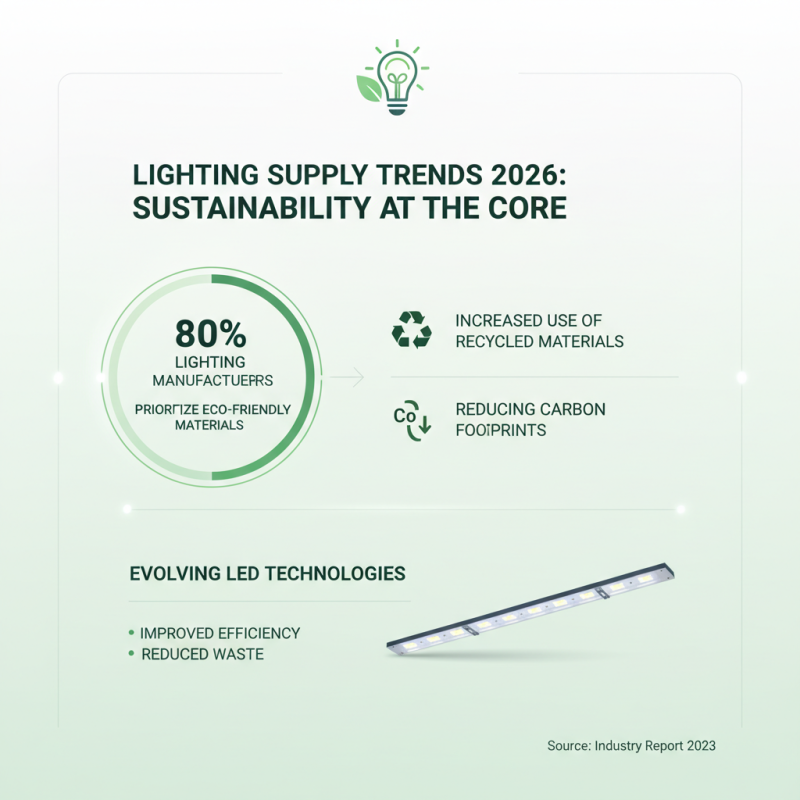
As we approach 2026, sustainability will continue to shape trends. The demand for eco-friendly lighting options is on the rise, with a clear shift towards products that minimize environmental impact. Yet, not every manufacturer is adapting quickly. The need for innovation and responsiveness in the Commercial Lighting Supply sector is critical. Ultimately, navigating these trends requires both foresight and a willingness to evolve.
Emerging Technologies in Commercial Lighting Supply for 2026
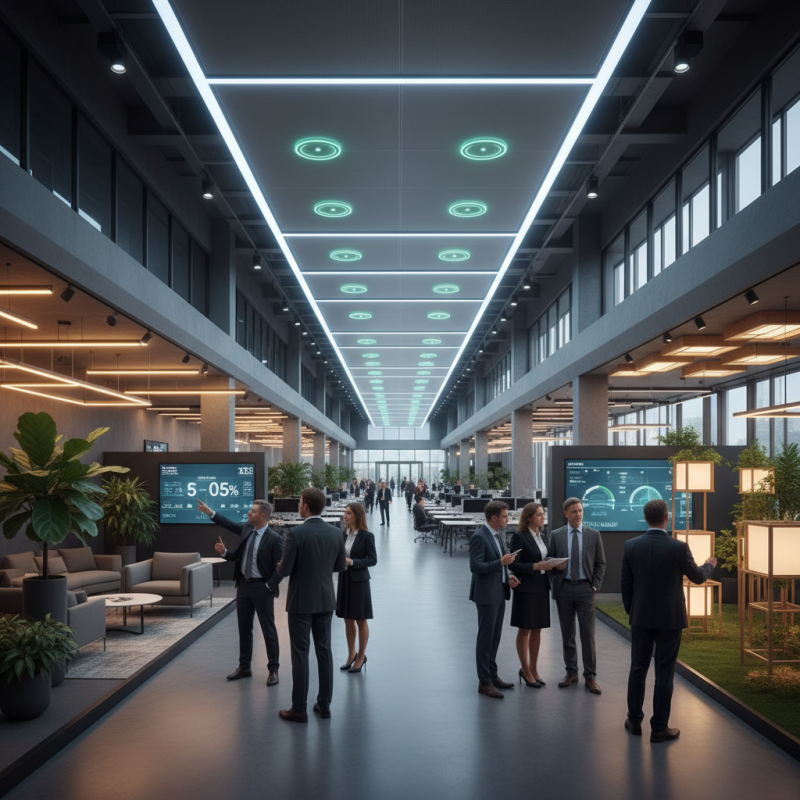
As we look towards 2026, the commercial lighting supply industry is poised for transformative changes. Emerging technologies are significantly influencing how lighting is designed, manufactured, and utilized. One notable trend is the integration of smart technologies. These innovations enable lighting systems to connect and communicate, enhancing efficiency and user experience. Imagine an office where lights adjust automatically based on occupancy and natural light. This is becoming a reality.
Sustainability is another key focus. Energy-efficient LED lighting continues to advance, with new solutions promising lower energy consumption and longer lifespans. Building owners and managers prioritize eco-friendly options, responding to growing environmental concerns. Yet, many still overlook the impact of poor-quality lighting choices. It can lead to higher maintenance costs and inadequate illumination.
Tips: Choose energy-efficient fixtures designed for your space. Explore smart controls to optimize usage. Also, remember that not all lighting technologies are equal. Research thoroughly to avoid costly mistakes in installation. The right choices can enhance both function and aesthetics in any commercial setting.
Top Commercial Lighting Supply Trends to Watch in 2026
| Trend |
Description |
Expected Impact |
Technology Involved |
| Smart Lighting Systems |
Integration of IoT for real-time adjustments and monitoring. |
Increased energy efficiency and cost savings. |
IoT, Big Data |
| Human-centric Lighting |
Lighting designed to improve well-being and productivity. |
Enhanced employee satisfaction and performance. |
LED, Smart Sensors |
| Sustainability Focus |
Development of eco-friendly lighting materials. |
Reduced environmental footprint and compliance with regulations. |
Recyclable Materials, Solar Power |
| Automated Control Systems |
Systems that automatically adjust lighting based on occupancy and daylight. |
Significantly lower energy consumption. |
Sensors, AI |
| Adaptive Lighting |
Lighting that adapts based on external conditions. |
Improved user comfort and energy savings. |
Smart Sensors, AI |
The Rise of Smart Lighting Solutions in Commercial Spaces
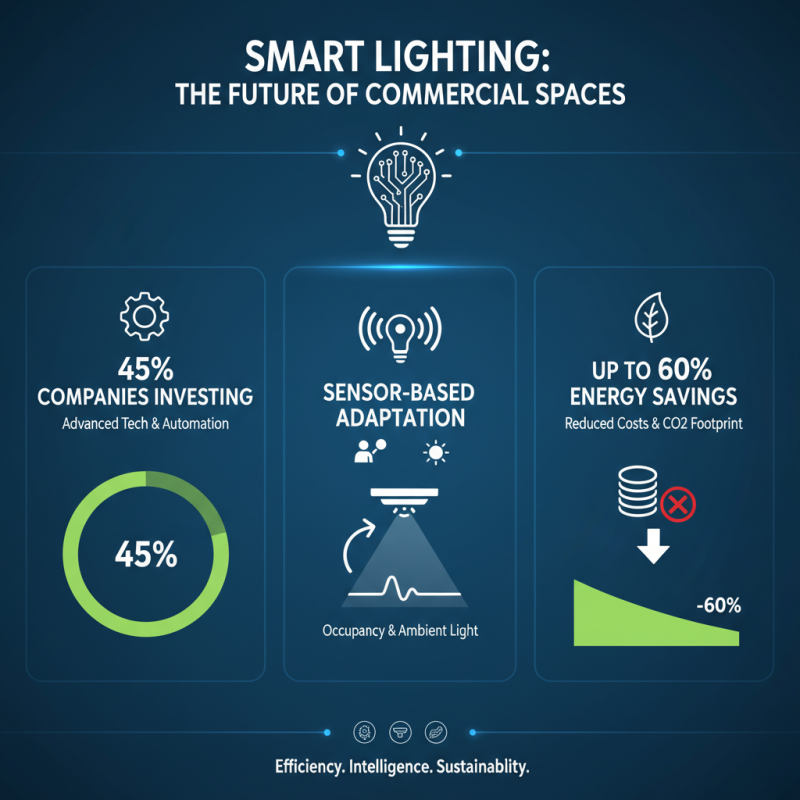
The rise of smart lighting solutions is transforming commercial spaces. Currently, about 45% of companies are investing in advanced lighting technologies. This includes sensors and automated systems that adjust brightness based on occupancy. Enhanced energy efficiency is not just a buzzword; it's measurable. Companies can cut energy costs by up to 60% through smart lighting.
However, the shift isn’t devoid of challenges. Many businesses struggle to integrate these systems with existing infrastructure. Compatibility issues can arise. Furthermore, initial investment costs can be a deterrent despite long-term savings. A 2023 report noted that 30% of businesses expressed concerns over return on investment in smart lighting.
Employee satisfaction is another area affected. Natural light and adjustable settings can boost productivity. Yet, not every office space can easily accommodate these innovations. Flexibility in design is crucial. As companies consider upgrades, it is important to weigh immediate needs against future potential. The balance is delicate but essential.
Consumer Preferences and Their Impact on Lighting Supply Trends
As we look ahead to 2026, consumer preferences are rapidly evolving. Energy efficiency remains a key focus. Customers are increasingly aware of their energy consumption. They expect lighting solutions that reduce costs while benefiting the environment. This shift drives manufacturers to innovate, producing smarter, greener lighting options.
Aesthetic appeal is another important factor. Consumers are drawn to unique designs and customizable features. They want lighting that reflects their personal styles, not just functional solutions. This desire leads to a surge in demand for decorative and artistic lighting options. However, not all products on the market meet these expectations. Some designs can feel generic or uninspired, prompting buyers to seek more personalized choices.
Additionally, the rise of smart home technology influences consumer decisions. People want products that integrate seamlessly with their existing systems. They are looking for lighting that can be controlled remotely and programmed for convenience. Yet, many find the technology daunting. There’s a gap between demand for innovation and the ease of use in actual products. This is a challenge that suppliers must navigate in the evolving landscape of commercial lighting.
Regulatory Changes Affecting Commercial Lighting Supply in 2026
In 2026, regulatory changes will significantly reshape the commercial lighting supply landscape. New energy efficiency standards will play a crucial role. According to the latest industry reports, a shift towards more stringent regulations is expected. These new laws will push companies to adapt quickly or risk penalties.
Corporations are now focusing on sustainable lighting solutions. Many municipalities will require a minimum efficiency of 120 lumens per watt for commercial lighting by the mid-2020s. This regulation aims to reduce energy consumption by nearly 30% across the board. Companies may struggle to meet these benchmarks, especially smaller suppliers without resources for rapid innovation.
With an eye on LED technology, organizations must consider their procurement strategies. The International Energy Agency projects that by 2026, over 75% of global lighting will be LED. However, some suppliers might face challenges transitioning from traditional systems. Barriers like cost and technology gaps will demand thoughtful planning. By adjusting supply chains and investing in training, businesses can position themselves to thrive in this evolving market.