China Top 10 Industrial LED Lighting Manufacturers
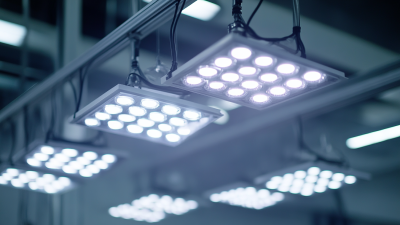
Industrial Led Lighting plays a practical role in factories, warehouses, workshops, and other demanding spaces. A suitable fixture must do more than appear bright in a product photo. It should provide consistent illumination across work surfaces, handle heat, dust, or vibration, and support sensible maintenance. A high-bay light above a production line, for example, faces different demands from a vapor-tight fixture in a washdown area. Details matter.
This guide introduces ten industrial LED lighting manufacturers in China and gives buyers a starting point for comparison. It considers product range, manufacturing experience, technical documentation, customization options, and after-sales support. Useful specifications include luminous efficacy, color temperature, ingress protection, operating temperature, lumen maintenance, and warranty terms. Check test reports and product certifications against the exact model, not just the company’s general claims. Ask how performance was measured. Small detail, big difference.
Still, a neat ranking can hide important gaps. Supplier information changes, and a polished catalogue does not prove real-world performance. Buyers should request sample units, review installation references, and confirm lead times before making a decision. Even a well-known manufacturer may not suit every project. The right choice depends on site conditions, lighting design, budget, and the support available after installation. This overview is a guide, not a substitute for independent technical checks.
Industrial LED Lighting in China: 120–200 lm/W and 50,000-Hour Lifespans
China’s industrial LED market is often discussed through two figures: 120–200 lumens per watt and 50,000 hours. These are useful benchmarks, not automatic guarantees. The U.S. Department of Energy’s 2022 Solid-State Lighting R&D Opportunities report sets a 250 lm/W target for general lighting by 2035, showing why high efficacy remains an active development goal. For buyers, check whether a quoted figure describes the complete luminaire or only its LED chips. The difference matters.
In a high-bay workshop, a 150 lm/W fixture can reduce input power while delivering strong light to work surfaces. Yet dust, mounting height, optics, and operating temperature affect real results. Small details matter. A 50,000-hour rating usually describes expected lumen maintenance, not a promise that every component will run that long. The Illuminating Engineering Society’s LM-80 and TM-21 methods help assess LED package lumen maintenance and project it over time; they do not remove the need to inspect driver, thermal, and test-condition data.
Ask manufacturers for independent test reports, fixture-level efficacy, and the stated maintenance threshold, such as L70. Also compare performance at the actual ambient temperature. Hot ceilings can shorten service life. And honestly, a single headline number rarely tells the whole story.
How to Evaluate Manufacturers: Efficacy, IP65, Warranty, and Certification
When comparing industrial LED lighting manufacturers in China, treat efficacy as a measured result, not a headline figure. Check the stated lumens per watt and ask whether it applies to the complete fixture or only the LED chips. Request test data for the exact model and operating conditions. A higher number is not automatically better if glare, heat, or uneven light makes work harder. Numbers need context.
For workshops, loading bays, and other exposed areas, verify that the fixture carries an IP65 rating. This indicates protection against dust and water jets, not immersion. Ask how the rating was tested and whether it applies to the assembled product, including cable entries and seals. A photo of a label is not enough. Real installation details matter.
Read the warranty closely. Confirm its duration, covered components, replacement process, and any limits tied to operating hours or temperature. Then check certification documents against the model number and issuing body; certificates should be current and independently verifiable. A useful supplier answers specific questions without relying on broad promises. I would still inspect sample fixtures before a large order, because paperwork cannot reveal every weakness in wiring, finish, or assembly.
China’s Top 10 Industrial LED Lighting Manufacturers: Profiles and Product Ranges
China’s top industrial LED manufacturers differ less by broad claims than by the environments they design for. A useful profile should compare high-bay fixtures for tall warehouses, vapor-tight luminaires for washdown areas, and floodlights for yards. Check output, beam angle, ingress protection, surge resistance, and operating temperature. Small details matter. A narrow beam can leave dark aisles.
Product ranges often extend from basic warehouse lights to dimmable systems with occupancy or daylight controls. The IEA’s 2023 Energy Efficiency report estimates that lighting accounts for about 15% of global electricity use, making fixture efficiency a practical purchasing issue. The U.S. Department of Energy’s solid-state lighting research also stresses efficacy, color quality, and reliability as connected design goals. Compare test conditions, not just headline lumen-per-watt figures.
When reviewing ten manufacturer profiles, examine warranty terms, photometric files, driver options, and evidence from installations similar to yours. Ask whether replacement parts remain available and whether controls work with existing systems. A neat datasheet is not proof of a neat installation. In practice, glare, dust buildup, and inconsistent dimming can disappoint; published specifications rarely tell the whole story.
Manufacturer Comparison: Output, Controls, Customization, and Energy Savings of 50–70%
A useful comparison of China’s top ten industrial LED lighting manufacturers starts with measured output, not headline wattage. Ask for delivered lumens, beam distribution, and test conditions. A high-bay fixture may look powerful on paper, yet a narrow beam can leave aisle edges dim. Check lumen maintenance and operating temperature too. These details affect performance over years.
Controls shape both usability and energy use. Compare dimming range, occupancy sensors, daylight response, and compatibility with existing control systems. In a warehouse, sensor placement can matter as much as the sensor itself. Small details matter. A 50–70% energy saving may be achievable when efficient LEDs replace older lighting, but it is not guaranteed. Baseline equipment, operating hours, and control settings all change the result. Request a site-based estimate rather than relying on a universal percentage.
Customization can include optics, color temperature, housing materials, mounting options, and cable entry points. These choices help match fixtures to high ceilings, dusty production areas, or cold storage rooms. Ask how changes affect lead time, testing, and warranty coverage. A comparison table is useful, but it can hide trade-offs: more customization may add cost or delay delivery. Record the exact configuration and test data for each quotation, so competing offers are compared fairly.
Industrial Applications: High-Bay, Warehouse, Factory, and Hazardous-Area Lighting
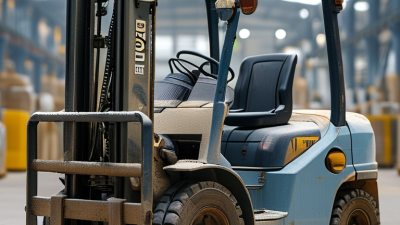
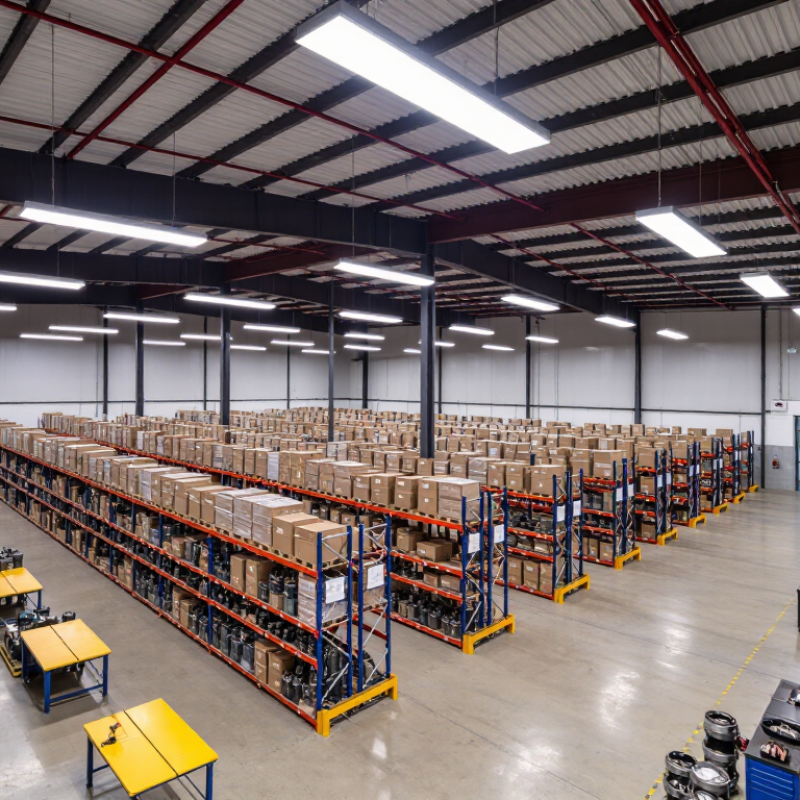
Industrial lighting is not just about replacing lamps. A high-bay fitting must put usable light on the floor, not into a forklift driver’s eyes. In tall warehouses, check beam angle, mounting height, glare, and aisle layout before selecting output. Motion sensors can help in low-traffic storage areas, but poor placement may leave workers in the dark. Details matter.
Factory conditions change the specification. Heat, dust, vibration, and washdown routines affect fixture life and maintenance access. For hazardous areas, confirm the equipment’s protection rating matches the site’s documented classification; a standard industrial fixture is not a substitute. The International Energy Agency estimates lighting uses about 15% of global electricity and produces around 5% of global greenhouse gas emissions. That makes efficient design worth attention, though savings depend on operating hours and controls.
The U.S. Department of Energy’s Energy Saver guidance says LEDs use at least 75% less energy than incandescent lighting and can last up to 25 times longer. This is a broad comparison, not a direct guarantee against every industrial lamp. Compare actual system wattage, delivered light, and maintenance needs. A spreadsheet can miss a dark loading corner. I have seen that overlooked detail matter more than another small efficiency gain.