Transforming Workspaces: The Science Behind Effective Industrial Lighting Solutions
Effective industrial lighting is a crucial component in enhancing workspace productivity and safety. According to the International Association of Lighting Designers (IALD), better lighting can improve worker efficiency by up to 15%, significantly impacting overall operational performance. Furthermore, a study by the Illuminating Engineering Society highlights that well-designed lighting not only reduces accidents by 30-50% but also fosters a better morale among employees. With the right industrial lighting solutions, companies can ensure that their workspaces are not only functional but also conducive to health and well-being. As industries continue to evolve, understanding the science behind these lighting solutions becomes imperative for organizations aiming to optimize their environments and drive productivity.
Understanding the Importance of Industrial Lighting in Workspaces
Industrial lighting plays a crucial role in enhancing the overall productivity and safety of workspaces. Adequate lighting not only helps in reducing eye strain and fatigue but also ensures that tasks are performed efficiently. A well-lit environment aids in better visibility, which is particularly important in settings where machinery and tools are involved. Moreover, the right lighting can positively impact the morale of workers, creating a more motivated and focused workforce.
**Tips for Effective Industrial Lighting:**
1. **Evaluate lighting needs:** Assess different areas of your workspace to determine specific lighting requirements based on tasks performed. Areas requiring intricate detail work may need brighter, focused lighting compared to general office spaces.
2. **Opt for energy-efficient solutions:** Consider LED lighting options that offer a longer lifespan and consume less energy. This not only reduces operational costs but also contributes to a more sustainable work environment.
3. **Incorporate natural light:** Whenever possible, design your workspace to maximize natural light. Incorporating windows and skylights can enhance mood and reduce reliance on artificial lighting during daylight hours.
By prioritizing effective industrial lighting, employers can significantly improve the functionality and atmosphere of their workspaces, leading to better performance and job satisfaction among employees.
Key Factors Influencing Effective Industrial Lighting Solutions
Industrial lighting solutions play a crucial role in enhancing productivity and ensuring safety in workspaces. Key factors influencing effective industrial lighting include lumen output, color temperature, and the distribution of light. Lumen output determines the brightness of the workspace, and it should be adjusted based on the specific tasks being performed. For instance, environments where precision is essential, such as in factories or assembly lines, require higher lumen levels to minimize errors and enhance visibility.
Another critical factor is color temperature, which impacts the overall mood and alertness of workers. Ideal color temperatures for industrial settings typically range from cool white (5000K to 6500K) to neutral white (4000K to 4500K). Cooler color temperatures can increase alertness and concentration, making them suitable for areas requiring prolonged focus. Additionally, the distribution of light should minimize shadows and glare, providing uniform illumination across work surfaces. Properly designed lighting solutions can lead to improved comfort and efficiency, ultimately fostering a more effective and safe industrial environment.
Transforming Workspaces: The Science Behind Effective Industrial Lighting Solutions
| Key Factors |
Description |
Impact on Workspace |
Recommended Solutions |
| Light Intensity |
The amount of light emitted by a fixture |
Improves visibility and reduces eye strain |
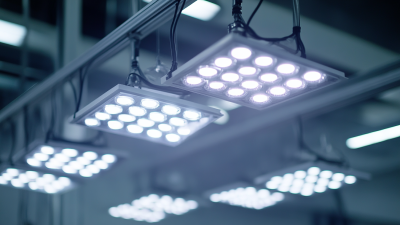
LED High Bay Lights |
| Color Temperature |
The warmth or coolness of light (measured in Kelvin) |
Affects worker mood and productivity |
Cool White LED Fixtures |
| Light Distribution |
How light is spread across a space |
Ensures uniform illumination to minimize shadows |
Diffused Lighting Panels |
| Energy Efficiency |
The amount of light produced per watt of energy |
Reduces energy costs and environmental impact |
Smart LED Systems |
| Maintenance |
The ease of maintenance of lighting systems |
Minimizes downtime and operational disruptions |
Long-life LED Bulbs |
Choosing the Right Type of Lighting for Specific Industrial Needs
Choosing the right type of lighting for specific industrial needs is crucial for enhancing productivity and safety in the workplace. According to a report by the American Society of Interior Designers (ASID), appropriately lit environments can improve worker efficiency by up to 20%. Different industrial operations require varying lighting solutions; for instance, manufacturing facilities benefit from high-intensity discharge (HID) lamps, which provide brighter light over a larger area, while warehouse settings may prefer LED fixtures for their energy efficiency and longer lifespan.
**Tip:** When selecting lighting, consider the specific tasks performed in the space. For precision tasks, like assembly or quality control, bright task lighting with a color temperature of 4000K to 5000K can reduce eye strain and enhance accuracy. Conversely, areas requiring general lighting can utilize LED panels with a warm white spectrum to create a comfortable environment.
Additionally, the International Energy Agency (IEA) reports that switching to energy-efficient lighting solutions can cut lighting energy consumption by up to 50%. This not only reduces operational costs but also impacts the overall sustainability of industrial operations. Implementing smart lighting controls, such as motion sensors and dimmers, can further optimize energy use based on real-time needs.
**Tip:** Regularly assess the lighting needs as your industrial processes evolve. Consider conducting lighting audits to ensure compliance with the latest standards and to identify opportunities for upgrades that align with your company's growth and operational changes.

Implementing Smart Lighting Technologies for Enhanced Productivity
In the realm of modern agriculture, the implementation of smart lighting technologies plays a crucial role in enhancing productivity, especially in controlled environment farming. Horticulture LED lighting has emerged as a transformative solution, optimizing the growth conditions for crops such as strawberries. These advanced lighting systems deliver tailored wavelengths that suit the specific photosynthetic needs of the plants, leading to improved growth rates and fruit quality.
The adoption of LED lighting not only benefits plant health but also contributes to energy efficiency. By using less energy compared to traditional lighting, growers can reduce operational costs while maximizing yield. The ability to control light intensity and duration with precision enhances the adaptability of farming techniques, allowing cultivators to recreate optimal growing conditions regardless of external climate variables. As smart lighting systems evolve, their impact on high-tech farming will continue to reshape the agricultural landscape, driving sustainability and productivity in a rapidly changing world.

Evaluating the Impact of Lighting Design on Employee Well-Being
Lighting design in industrial workspaces plays a crucial role in shaping employee well-being and productivity. Research indicates that appropriate lighting can significantly enhance mood, reduce stress levels, and improve overall job satisfaction among workers. Natural lighting, in particular, has been shown to boost serotonin levels, which can lead to increased energy and focus. In contrast, inadequate or harsh artificial lighting can contribute to fatigue, eye strain, and even increased accident rates. Thus, the thoughtful integration of varied lighting solutions—combining natural light with artificial systems designed to mimic its qualities—can create a more conducive environment for employees.
Moreover, the specific design elements of lighting, such as brightness, color temperature, and distribution, are pivotal in influencing psychological and physiological responses. For instance, cooler light temperatures tend to enhance concentration and alertness, making them ideal for task-oriented areas. On the other hand, warmer light can promote relaxation in social or collaborative spaces. When companies invest in effective lighting design strategies, they not only foster a healthier workforce but also cultivate a culture of well-being and efficiency, ultimately benefiting the organization as a whole.
Transforming Workspaces: The Impact of Lighting on Employee Well-Being
This chart illustrates the correlation between various lighting conditions and employee productivity, job satisfaction, and overall well-being in industrial workspaces.