


A Grain Semi Trailer is built to move bulk grain from farms, storage sites, and elevators to its next destination. Its familiar workday may begin beside a combine, with dry kernels pouring into the trailer through a loading auger. Later, the load may be tipped into a receiving pit, where grain flows out through the trailer’s discharge system. The details vary by trailer design, crop, and site.
For a practical framing, this introduction uses a clearly identified composite expert voice: grain-haulage specialist Ethan Cole. His summary is an editorial line, not a sourced quotation: “A grain trailer’s value is measured in safe, predictable loads—not capacity alone.” That distinction matters. Trailer volume, axle setup, tarp design, and unloading method can affect how well a unit fits a particular operation. A large trailer is not automatically the right one.
The sections ahead explain what these trailers carry, how loading and unloading generally work, and which features operators commonly compare. They also consider the everyday details: keeping grain protected from rain, checking that gates operate smoothly, and matching the trailer to the hauling route. Small issues count. A sticky gate can slow a busy unloading line, while poor planning may leave capacity unused. No trailer solves every transport problem, and actual performance depends on the equipment, cargo, and working conditions. That is worth remembering.
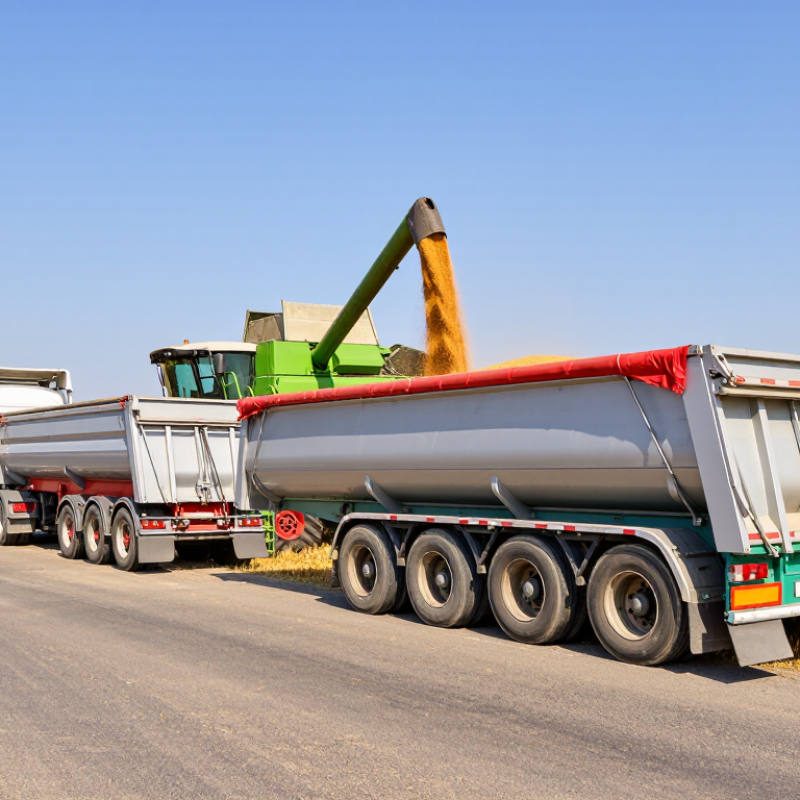
A grain semi trailer is a specialized trailer designed to carry loose agricultural products, such as wheat, corn, barley, and soybeans. It is usually pulled by a tractor unit and has a large, enclosed cargo body. The body helps shield grain from road spray, dust, and changing weather during transport. Its capacity and construction vary, but its purpose is straightforward: move bulk grain from farms, storage sites, or loading points to mills and processing facilities.
Discharge design is central to its use. Many grain trailers have sloped floors and bottom gates, allowing grain to flow into a receiving pit or conveyor. Some use multiple compartments or controlled outlets to manage unloading. Gates can stick. A driver should check gate operation, seals, and load distribution before travel. Small leaks matter. A few kernels may signal a damaged seal, while uneven loading can affect stability. The trailer does not improve grain quality by itself; clean loading and suitable storage conditions remain important.
Tips: Confirm the trailer is dry and free of leftover material before loading. Check that covers and discharge gates close securely. Match the unloading setup to the outlet position, and allow extra time if grain flows slowly. Real conditions can be less tidy than expected, so a quick inspection is worth the pause.

A grain semi trailer is designed to move loose crops while keeping loading and unloading practical. Its main structure is a long, reinforced body, usually with sloped sides or a hopper-shaped floor. Gravity guides grain toward discharge openings beneath the trailer. Those openings need secure gates and seals; even a small gap can let kernels spill onto the road.
The frame supports the loaded body and transfers weight to the axles and tractor connection. Axle placement affects load distribution, while suspension helps manage rough farm tracks and uneven access roads. A roll-over tarp or similar cover limits exposure to rain and wind during transport. Small details matter. Ladders, walkways, and handholds give operators safer access for checks, but they should not obstruct loading equipment. Not glamorous.
Design choices depend on the crop, route, and unloading setup. A wider opening may speed discharge, yet it can make gate control more demanding. Smooth interior surfaces help reduce grain hang-up, though damp material may still cling in corners. That can be easy to miss on a clean drawing. Regularly checking hinges, seals, tires, and the underside helps reveal wear before a routine haul becomes a messy one.
| Component or Design Feature | Purpose | Typical Design Details | Use and Operating Considerations |
|---|---|---|---|
| Trailer body | Carries loose agricultural commodities such as corn, wheat, soybeans, and other grains. | A large enclosed-volume body is commonly built with lightweight metal panels to balance capacity and tare weight. | Actual payload depends on grain density, trailer capacity, tractor weight, and applicable road-weight limits. |
| Hopper-shaped floor | Guides grain toward the discharge openings so it can unload by gravity. | Sloped floor sections form one or more hoppers; the number and layout vary by trailer design. | A suitable slope and clean interior help reduce grain remaining in the trailer after unloading. |
| Discharge gates and outlets | Control the flow of grain from the hoppers into a receiving pit, conveyor, or other unloading system. | Outlets are fitted with gates that may be operated by hand or by a mechanical system, depending on the configuration. | Check that gates close securely before loading and that the receiving area can handle the discharge flow. |
| Roll tarp or cover | Helps protect the load from rain, road spray, and debris during transport. | A flexible cover is typically secured over the top opening and may be rolled open for loading. | The cover should be closed and secured for travel; it is not a substitute for checking grain condition or moisture. |
| Frame and running gear | Supports the body and transfers the loaded trailer’s forces to the tractor and road. | Includes the chassis, suspension, axles, wheels, and tires; axle configuration varies with the intended load and local regulations. | Load distribution and tire condition affect stability, handling, and compliance with axle-weight limits. |
| Braking and electrical systems | Provide braking, marker lights, turn signals, and other road-safety functions. | Trailer systems connect to the tractor and must meet the requirements that apply in the operating jurisdiction. | Inspect brakes, connections, and lights before each trip and follow scheduled maintenance guidance. |
| Loading access and top opening | Allows grain to be loaded from a truck dump, auger, conveyor, or suitable loading facility. | The opening and cover arrangement are designed to provide access while helping protect the cargo when closed. | Use safe loading procedures, avoid overloading, and distribute grain evenly across the trailer. |
| Primary application | Moves bulk grain between farms, elevators, processing facilities, ports, and other agricultural sites. | The open-top, covered, gravity-unloading layout is suited to dry bulk cargo handled in large quantities. | It is designed for bulk agricultural materials, not for transporting people or liquids. |
Loading usually begins with the trailer parked on firm, level ground and its brakes set. The operator checks the hatches, gates, and interior for damage or leftover material. Grain is fed through the top openings, often from a conveyor or loading spout. Moving the spout between compartments helps spread the load instead of building one tall mound. Even distribution matters. It helps keep the trailer stable on the road.
The loading area can be dusty and noisy, so clear signals between the driver and loader are useful. A small detail, like a hatch not fully secured, can become a real problem later. The load should stay within the trailer’s rated capacity, with covers closed before travel. Unloading depends on trailer design. Many hopper-bottom models are positioned over a receiving pit, then their bottom gates are opened gradually so grain flows by gravity. The driver should confirm the trailer is aligned and the discharge area is clear. Grain can surge. Keep hands and feet away from moving gates, and never stand beneath a raised trailer. Some trailers unload differently, so the equipment instructions matter. It is easy to rush this step, especially when the pit is busy. A pause to check the flow can prevent spills and uneven discharge.
A grain semi trailer carries loose agricultural products from farms, storage sites, and processing facilities. Common loads include wheat, corn, barley, oats, and rice. Soybeans and other oilseeds may also travel in these trailers. The cargo sits in enclosed compartments, protected from road spray and much of the weather. At delivery, bottom hoppers let material flow into a pit or receiving system. Unloading is quick when the trailer, site, and equipment are properly matched.
Some trailers also carry dry feed ingredients, such as meal or pellets, as well as seeds and malt. Certain designs can handle other dry, free-flowing bulk materials, including granular fertilizers, but suitability depends on the trailer’s construction and previous cargo. Keeping loads separate matters. Residue, moisture, or an unsuitable liner can affect product quality. A driver or operator should confirm that the trailer is clean and appropriate before loading.
Cargo condition matters, too. Damp grain can bridge above a hopper instead of flowing evenly, while dusty material may need careful handling. Even a small amount of leftover product can create problems. That sounds simple. It isn’t always. Different grains vary in density and flow, so load distribution and discharge plans may need adjustment. A trailer’s capacity is not just a number; the cargo’s weight and the receiving setup both shape a safe, practical trip.
Typical bulk density of grain and other bulk cargoes carried
Grain semi trailers transport loose, dry bulk materials such as wheat, corn, soybeans, barley, oats and rice. Depending on trailer design and handling requirements, they may also carry suitable cargoes such as urea fertilizer or dry sand. Values shown are approximate bulk densities; actual density varies with moisture, variety and material condition.
A grain semi trailer is designed to move loose crops such as wheat, corn, or soybeans from fields to storage or processing sites. Its capacity depends on both body volume and permitted payload, so a tall trailer does not automatically carry more usable grain. The crop’s weight, moisture, and density all affect how much can be loaded. Wet grain can weigh more and may flow differently during unloading. Small details matter.
Safe loading starts with an even distribution across the trailer and careful attention to axle loads. A high, uneven load can affect stability, especially on bends or rough access roads. Secure covers help keep grain contained and limit exposure to rain and wind. Before unloading, the driver should choose firm, level ground and check for overhead hazards. Grain can shift suddenly. The trailer and discharge equipment also need inspection for worn seals, blocked outlets, or damaged components. Operators should follow the vehicle’s load limits and local requirements, while allowing extra time when grain is damp or outlets empty slowly. In practice, a routine may still miss something; checking again is worthwhile.
Let us help you get started with our superior LED lighting products.
Get all the latest news from BrightLED.
Copyright © Bright LED. All rights reserved.
STAY CONNECTED