


Made in Britain
BrightLEDBrightLED
MENUMENU
  • Home
  • Products
  • Projects
  • About
  • Blog
  • Contact
Blog
Why Choose an Eyeglass Showcase for Retail Stores?

Why Choose an Eyeglass Showcase for Retail Stores?

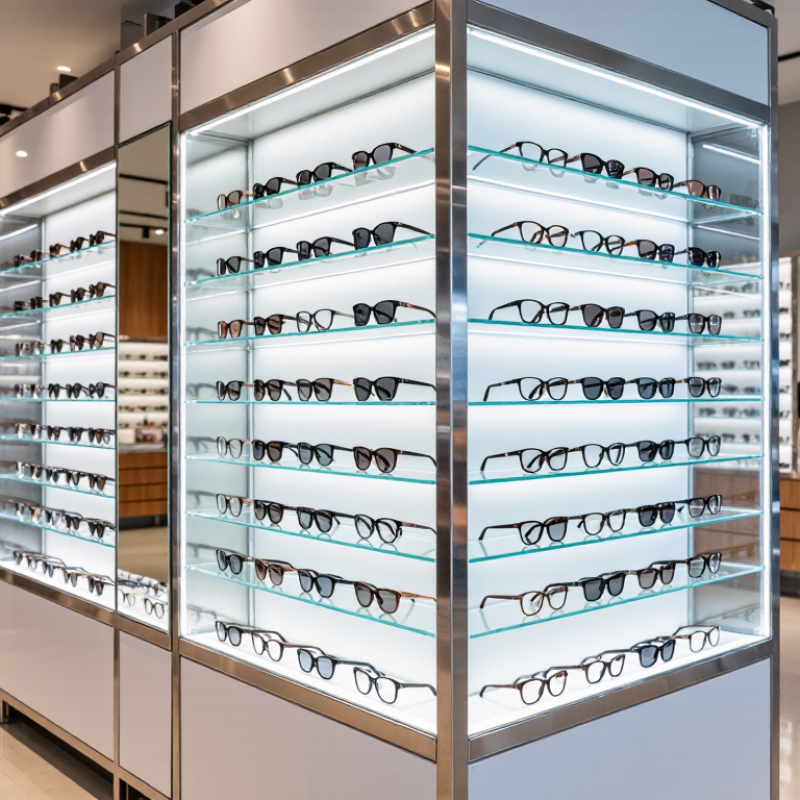
An eyeglass display does more than hold frames; it shapes how shoppers notice, compare, and handle them. For retail stores, an Eyeglass Showcase can keep popular styles visible while giving each frame a clear place. That matters. Customers can scan colors, bridge shapes, and lens sizes without opening crowded drawers or asking staff to retrieve every option. A well-planned case also helps staff maintain a consistent presentation during busy hours. Yet glass, lighting, and shelf spacing need to work together. Glare can hide details, and tightly packed rows can make browsing harder. Small details count.

Before choosing a unit, consider store size, frame range, sightlines, and cleaning routines. Adjustable shelves may suit changing collections, while secure storage can help protect higher-value stock. Materials matter too: sturdy joints and smooth edges are generally better suited to daily use than a display chosen only for appearance. That is not always obvious in a product photo. Measure the aisle and check the viewing height where customers actually stand. Ask how easily the case can be cleaned, restocked, and adapted as styles change. No showcase fixes poor service. But the right one can support easier browsing, protect frames from routine handling, and make a store feel more considered. This guide explores what to assess, where showcases work best, and which trade-offs deserve a second look.
Why Choose an Eyeglass Showcase for Retail Stores?
Table of Contents [Hide]
1 What an Eyeglass Showcase Is and How It Works
2 How Showcases Improve Product Visibility and Store Organization
3 How Display Cases Protect Eyewear and Support Retail Security
4 How Showcase Design Shapes Customer Browsing and Buying
5 What Retailers Should Consider When Choosing a Showcase

What an Eyeglass Showcase Is and How It Works

An eyeglass showcase is a display cabinet designed to present frames clearly while keeping them organized and accessible. It usually combines shelves, lighting, product labels, and glass panels. Staff can arrange frames by style, material, or price, so shoppers can compare shapes without searching through drawers. Some cabinets are open for easy browsing; others use lockable doors for higher-value stock. The right setup depends on the store’s layout and how customers try on frames.

It is a practical tool, not a sales guarantee. Lighting can reveal frame details, but glass glare may make lenses harder to inspect. Keep frequently handled styles within reach, and leave enough space for customers to use a mirror. Grand View Research valued the global eyewear market at about $179.4 billion in 2023. Fortune Business Insights estimated about $175 billion for that year; differing market definitions can produce different totals. These reports show the scale of the category, not that a showcase alone increases sales. That distinction matters. A well-kept display supports browsing, while staff guidance and accurate product information help shoppers make informed choices.


How Showcases Improve Product Visibility and Store Organization

A well-arranged eyeglass showcase makes frame details easier to compare. Clear glass shelves and focused lighting help customers notice shapes, colors, and finishes without handling every pair. Keep popular styles near eye level, with enough space between frames to prevent visual clutter. Small labels can show key details, such as frame material or fit.

Good organization also helps staff answer questions faster. Group frames by style, size, or intended use, and keep backstock clearly separated from display pieces. The 2023 Global Shopper Study reported that 76% of shoppers want store associates to know inventory levels. That finding points to a practical need: display organization should match inventory records. A neat case is useful, but it cannot fix inaccurate stock information.

Details matter. Clean fingerprints from glass, check that lighting does not create glare, and leave room for customers to view frames from different angles. A showcase is not magic. Too many products can still overwhelm shoppers, and bright lighting may distort frame colors. Store teams should observe where customers pause, ask questions, or struggle to compare styles, then adjust the layout. A small change can make the display easier to browse.

Why Choose an Eyeglass Showcase for Retail Stores? — How Showcases Improve Product Visibility and Store Organization

A practical comparison of common eyewear display formats and the ways they support product visibility, organization, and security.

Showcase Type Typical Placement Typical Capacity Product Visibility Organization Benefits Security Considerations Best Suited For
Open countertop display On a sales counter or consultation table Approximately 6–18 frames, depending on layout Frames are easy to see and handle; useful for close-up browsing. Keeps a curated selection within reach and makes side-by-side comparisons simple. Products are readily accessible, so staff supervision may be appropriate. Featured styles, fitting consultations, and small selections customers can try.
Wall-mounted frame display On a wall behind or beside the sales area Approximately 20–60 frames per section, depending on wall space and spacing Uses vertical space to present many frames within a broad viewing area. Frames can be grouped by style, material, color, or intended wearer. Security depends on the mounting system and whether frames are freely removable. Stores that want to present a wide assortment while keeping floor space clear.
Lockable glass cabinet Against a wall, behind a counter, or in a supervised display area Approximately 12–40 frames, depending on shelf count and cabinet size Glass panels keep products visible while separating them from frequent handling. Shelves can separate collections and make it easier to maintain a tidy presentation. Lockable doors help limit access; staff assistance is needed to handle displayed frames. Higher-value frames, limited editions, or products that need controlled access.
Rotating countertop stand On a counter or freestanding table Approximately 12–36 frames, depending on the number of arms or panels Customers can view different sides by turning the stand. Compact footprint keeps a selected group together and easy to browse. Frames are generally accessible; placement within staff view can support oversight. Compact stores, impulse browsing areas, or a focused selection of everyday frames.
Freestanding modular showcase In an aisle, at a department boundary, or in a central display zone Varies by module; capacity can be expanded by adding sections Can be approached from one or more sides, depending on its design. Adjustable sections help organize products into clear categories as inventory changes. Open modules allow direct access; lockable modules can be chosen where needed. Stores that need a flexible display layout or expect their assortment to change.

Planning note: Capacity figures are approximate examples, not product specifications. Actual capacity and visibility depend on frame size, spacing, shelf dimensions, lighting, and showcase design.

How Display Cases Protect Eyewear and Support Retail Security

An eyeglass showcase protects frames from dust, fingerprints, and casual handling while keeping them visible. That matters when lenses are easily scratched or customers want to compare several frames side by side. Clear panels let shoppers inspect shapes and colors without removing every pair from the display. A lockable case also gives staff control over access. Still, glass is not magic.

The National Retail Federation’s 2023 National Retail Security Survey reported average retail shrink of 1.6% of sales in fiscal 2022. It estimated losses at $112.1 billion across U.S. retail. Those figures cover many product types, not eyewear alone, but they show why retailers consider layered loss prevention. A showcase can help by keeping higher-value frames in a defined, visible area and making missing items easier to notice. Staff can keep popular styles accessible while storing premium pieces behind a lock. The details matter: clean glass, secure hinges, and lighting that avoids glare make products easier to inspect. A poorly placed case can slow browsing, though. If staff are busy, customers may wait to try on frames, so the display should balance controlled access with convenient service.

Why Choose an Eyeglass Showcase for Retail Stores?

Protective Features in an Example Lockable Eyewear Display

Illustrative example configuration, not measured retail-loss data. A value of 1 means the feature is included; 0 means it is not. A showcase can create a physical barrier and limit casual handling, while a lock and staff visibility can support store security.

How Showcase Design Shapes Customer Browsing and Buying

An eyeglass showcase influences how shoppers notice, compare, and handle frames. Clear glass and even lighting help reveal color, shape, and small details such as hinge finishes. Place popular styles near natural sightlines, but leave enough space between frames. A crowded shelf can make browsing feel like work. Small details matter.

The display should make comparison easy. Group frames by shape or fit, and use simple labels that answer practical questions without overwhelming shoppers. Adjustable shelves can keep larger frames from disappearing behind smaller ones. A gentle tilt may also improve visibility, though it can create reflections under bright ceiling lights. Test the display from a seated position as well as while standing.

A well-designed showcase invites people to pause without making every frame feel untouchable. Keep frequently requested styles within easy reach, and leave room for staff to offer a mirror or explain fit. Security features matter, but bulky locks or stiff doors can interrupt the experience. There is no single layout that suits every store; the right balance depends on lighting, traffic, and the frames being sold. Even a polished display can feel cold if shoppers cannot comfortably ask to try something. That part is easy to overlook.

What Retailers Should Consider When Choosing a Showcase

Why Choose an Eyeglass Showcase for Retail Stores?

When choosing a showcase, start with how customers browse and how staff serve them. The Vision Council’s 2023 Consumer inSights research found that about three in four U.S. adults use some form of vision correction. That makes clear viewing and easy frame comparison important. Check that shelf spacing accommodates different frame shapes without crowding. Sit or stand at the display as customers would. Can they see details without lifting every frame? Small details matter.

Lighting should reveal frame color without creating glare on lenses. Ask for adjustable, even illumination, then test it under your store’s actual lighting. Also consider glass strength, lock placement, cleaning access, and whether staff can restock quickly.

The National Retail Federation’s 2023 National Retail Security Survey reported average retail shrink of 1.6% of sales in 2022. This figure is not specific to eyewear, but it supports assessing security alongside accessibility. A locked cabinet may protect stock yet slow service. Test it daily.

Measure doorway clearance and floor space before ordering; attractive displays can still obstruct customer flow. We sometimes overvalue appearance. A practical trial layout may expose problems that product images cannot.

Article Source:

  • Jewelry Holder
  • Eyeglass Showcase

Interested? Let's talk.

Talk to the Experts

Let us help you get started with our superior LED lighting products.

Call 01282 505400

Request a call

Email us

Join our newsletter

Get all the latest news from BrightLED.

See our product range

Can't find a product you're looking for? Get in touch!

View Range

Product Categories

  • 2D Style Fitting
  • LED Downlights
  • LED Flood Lights
  • Linear Lights
  • LED Industrial Lighting
  • Office Lighting
  • Retail LED Lighting
  • Emergency Lighting
  • LED Lamps
  • LED Tube Lighting
  • Recessed LED Light
  • Spot Light Series
  • IP65 & Non-corrosive Rating LED Fittings
  • View all products

Useful Links

  • Download/Resources
  • Privacy
  • Warranty Policy
  • Terms and Conditions

Company

  • About
  • Projects
  • Contact
  • Blog
  • Made in Britain
  • Samsung
  • Osram
  • Tridonic

Copyright © Bright LED. All rights reserved.

STAY CONNECTED

Top