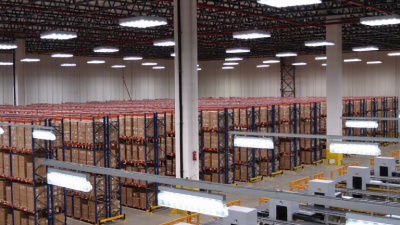
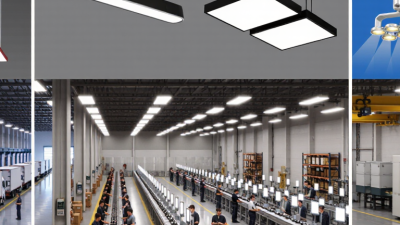
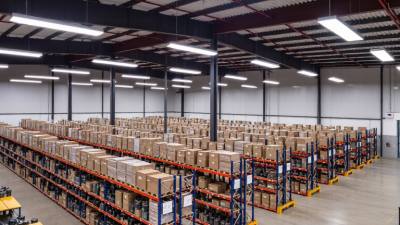
2026 Best Industrial Lamps for Warehouses
Warehouse lighting is not just about brightness. A dim aisle can hide a label, while glare on polished floors can tire workers before a shift ends. The best Industrial Lamps balance visibility, durability, energy use, and maintenance needs. Those needs vary: a dusty loading bay calls for different protection than a clean picking area.
Lighting educator Craig DiLouie often stresses matching lighting to the task and environment. A useful way to express that principle is: “Choose the fixture for the work, the conditions, and the people who maintain it.” Treat that as a practical guide, not a substitute for project-specific advice. For 2026, this overview compares high-bay LEDs, linear fixtures, and vapor-tight models, with attention to beam spread, color quality, controls, and service access. Look beyond the wattage on a product sheet. Check mounting height, aisle layout, ambient temperature, and whether a lift is needed to replace a driver. Small details matter.
A careful choice can improve visibility and reduce avoidable maintenance, but no single lamp fits every warehouse. Specifications can look convincing on paper. The installed result may differ. This guide will help you ask better questions before comparing products, while leaving room for a less tidy truth: even a strong fixture cannot fix poor layout or neglected cleaning.
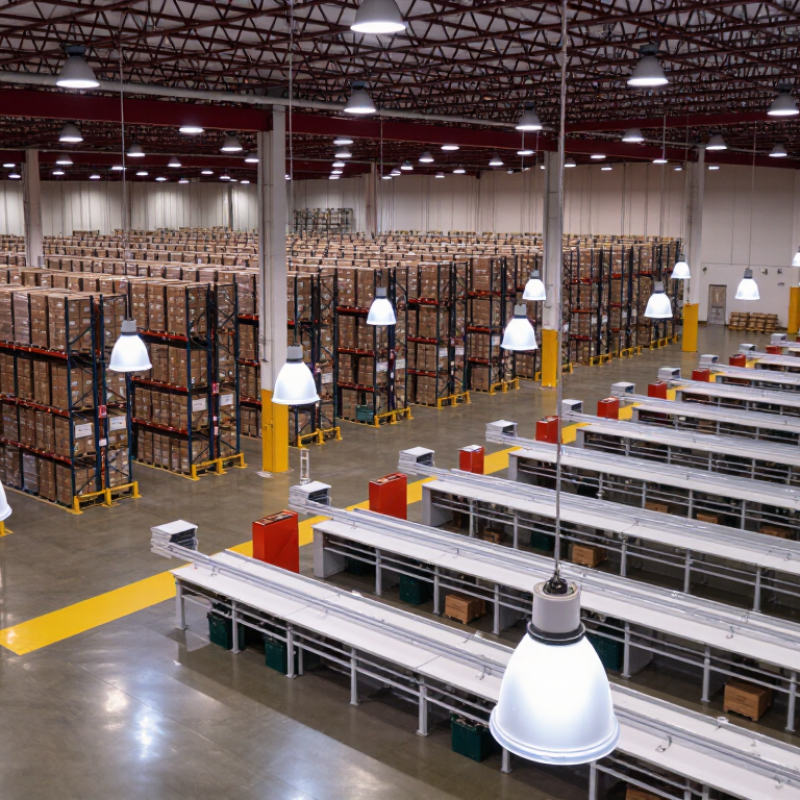
What Defines a High-Performance Warehouse Lamp in 2026?
A high-performance warehouse lamp starts with useful light, not an impressive lumen figure. In tall aisles, narrow optics can direct light onto shelving and floors while limiting spill. Broad beams may suit loading zones, where workers need even visibility across open bays. Good distribution reduces harsh bright spots and deep shadows. That matters.
Efficiency matters, but compare delivered light per watt alongside optical performance and expected operating hours. Stable drivers help reduce visible flicker, while suitable color rendering helps staff distinguish labels, wiring, and surface defects. Check thermal design, too. Fixtures trapped in poorly ventilated ceiling spaces may lose output sooner. A durable housing and an ingress rating matched to dust or moisture exposure can reduce maintenance interruptions. Do not over-specify.
Controls can cut wasted lighting when occupancy sensors or daylight response suit the building’s layout and work patterns. Ask for photometric layouts based on actual ceiling heights, rack positions, and aisle widths. Then verify the result after installation. Real warehouses rarely match a perfect model. Measurements can reveal glare or shadowed picking areas that drawings missed. Even a strong specification needs practical checks, and that part is easy to neglect.
Which Industrial Lamp Types Suit Different Warehouse Layouts?
Warehouse lighting should follow the building’s shape, not just its floor area. In tall, open zones, high-bay lamps can spread light across broad work areas. Choose beam angles based on mounting height and rack placement. A wide beam may leave bright floors but dim upper shelves. That mismatch is easy to miss.
Long, narrow aisles usually benefit from linear fixtures with narrower light distribution. Position them along the aisles to limit dark stripes between racks. Check for shadows cast by stored cartons, especially at picking levels. Motion sensors can reduce energy use in quiet aisles, though poorly placed sensors may switch lights off during slow tasks. Test the settings with workers present.
Lower ceilings, mezzanines, and packing stations often suit low-bay fixtures with controlled glare. Add focused task lighting where labels, small parts, or paperwork need close inspection. At loading docks and washdown-prone areas, sealed, moisture-resistant fixtures are a practical choice. Dust and temperature also matter. A site walk-through helps identify blocked light and troublesome shadows before installation. It is tempting to rely on a layout drawing alone, but real shelving rarely stays exactly as planned.
How Do Leading Warehouse Lamps Compare on Efficiency and Durability?
Warehouse lamps are often compared by lumens per watt, but that figure needs context. A high-efficiency fixture can reduce energy use, yet poor optics may leave aisle edges dim. Compare delivered light levels at rack faces and floor height, not just the package rating. Numbers need context. Check whether measurements account for lenses, operating temperature, and dimming.
Durability depends on heat control, construction, and the warehouse environment. Enclosed fixtures can trap heat, shortening component life when cooling is inadequate. Dust matters. Look for clearly stated ingress and impact ratings, then match them to actual cleaning methods and ceiling height. A serviceable driver and replaceable components can also limit downtime. Ask how warranty conditions handle long daily operating hours; small details are easy to miss.
The strongest choice balances efficient lighting with stable performance over time. Review photometric files, rated lifetime assumptions, and documented test results, then inspect a sample under real operating conditions if possible. Compare glare, shadows beneath pallet racks, and startup behavior in cold areas. One caveat: a neat spreadsheet cannot reproduce every ceiling layout. Recheck readings after installation, because fixture spacing and mounting height can change the result.
How Should You Match Lamp Output to Ceiling Height and Work Tasks?
A warehouse lamp should be selected for the work surface, not just the ceiling. Lumens describe light produced; lux or foot-candles describe light reaching a surface. As mounting height increases, light spreads over a larger area, so the floor may receive less illumination. Height changes everything. A high ceiling may call for greater output, narrower beam distribution, or both—not simply a higher-wattage fixture.
Match the beam to the layout. In tall storage aisles, narrow distributions can direct light down rack faces and reduce dark gaps. Open packing areas often benefit from broader, overlapping beams. Check the actual task: reading small labels needs clearer, more uniform light than moving pallets through a passage. A common oversight is aiming only for bright floors while leaving shelf labels in shadow.
Use project specifications and applicable lighting guidance to set target illuminance; needs vary by task and facility. Then check fixture spacing, glare, and uniformity with a lighting plan. If possible, measure at the floor and work surfaces after installation. Dust, aging lenses, and blocked light can reduce useful output over time, so allow for maintenance. I would not trust a single lux reading as proof that every aisle is comfortable. Walk the space, especially under racks and near loading doors.
What Installation and Maintenance Factors Affect Long-Term Performance?
Long-term performance starts with a layout matched to rack height, aisle width, and ceiling structure. Measure light levels at floor height and at working surfaces, not just directly beneath each fixture. A few lux readings can reveal dark patches between tall racks. Mounting angle matters, too; poorly aimed lamps can create glare on glossy packaging and forklift mirrors.
Allow airflow around the lamp body and driver, since trapped heat can shorten component life. Check that the fixture’s protection rating suits the dust and moisture present in the building. Sealed fittings may help in washdown areas, but they still need proper installation. Small details matter. Use compatible controls and wiring, and have a qualified electrician verify connections before energizing the system. Record initial light levels; later measurements make gradual output loss easier to spot.
Maintenance should be planned around safe access, operating hours, and the warehouse’s cleaning schedule. Inspect lenses for dust buildup, look for loose mounting hardware, and check for flickering or uneven light. Clean with methods approved for the fixture, rather than abrasive pads that can cloud a lens. Keep a simple log of repairs and replacement dates. In practice, teams sometimes postpone inspections until a lamp fails; that seems efficient, but a dark aisle can disrupt work before anyone notices the cause.
2026 Best Industrial Lamps for Warehouses: Installation and Maintenance Factors
How daily operating schedules affect the time needed to reach a 50,000-hour operating-life benchmark.
Estimates assume 365 operating days per year and no downtime: 12 hours per day reaches 50,000 hours in about 11.4 years, 16 hours in 8.6 years, and 24 hours in 5.7 years. This is a time-to-hours calculation, not a service-life guarantee. Ambient temperature, fixture ventilation, correct installation, dust buildup, and timely driver or component maintenance can all affect long-term performance. Follow the luminaire manufacturer's specifications.